
AI and Cybercrime: How LLMs Enable Cyberattacks
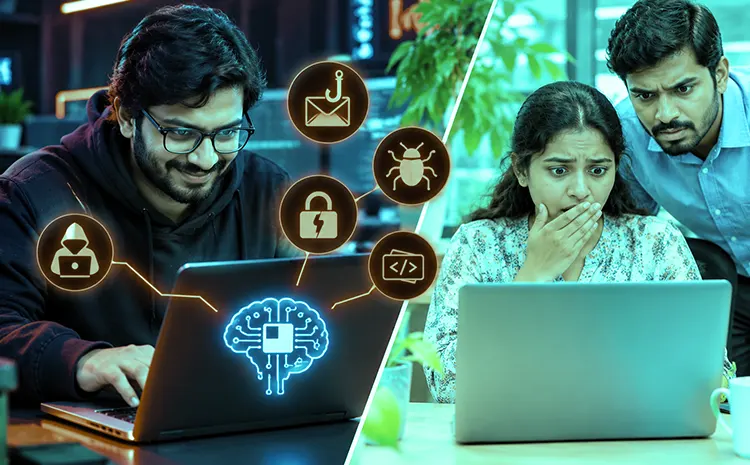
Artificial intelligence is revolutionizing many areas of our lives – but unfortunately, it’s also revolutionizing cybercrime. It’s no wonder, then, that AI is currently experiencing a boom in the use of cybercrime. Text generators are increasingly being used for malicious purposes. Particularly dangerous are so-called mallas, which, through the misuse of LLMs (Limited Libraries), enable novel phishing attacks, malware campaigns, and other cyberattacks. Learn more here!
How Is AI Used for Cybercrime?
What Are Mallas and How Do They Work?
With the advancement of artificial intelligence (AI), Large Language Models (LLMs) have become an indispensable tool in many industries. These models, which can analyse and process large amounts of text, are used for a wide variety of tasks – from text generation and customer data analysis to the automation of customer service processes.
But what began as groundbreaking technology also has a dark side: mallas (short for “malicious services” or “malicious AI services”). The term refers to the misuse of LLMs to create malicious content or services that give criminals access to sensitive information and can cause significant damage. Mallas make it possible to generate sophisticated phishing campaigns, malware, and fraudulent websites that are difficult for many traditional security solutions to detect.
What makes this particularly dangerous is that increasing automation is likely to make such attacks easier and more frequent. Today, basic skills and access to LLM integration are sufficient to carry out complex cyberattacks. This scenario poses a significant threat to small and medium-sized enterprises (SMEs), which often have fewer resources for IT security measures than large corporations.
How Cybercriminals Use LLMs for Attacks
Jailbreak Prompts and Malicious Content Generation
LLMs like GPT-3 or GPT-4 are inherently capable of performing many tasks that are useful in the IT world—but can also be misused. Mallas exploit an LLM’s ability to understand and generate human language for criminal purposes.
Particularly popular among cybercriminals are jailbreak prompts. These specific commands allow criminals to bypass the protection mechanisms designed to prevent LLMs from creating malicious content. This enables them, for example, to create malicious code or phishing emails that are not detected by many conventional spam filters.
Malware and Phishing Campaigns
One example of LLM misuse is the ability to generate sophisticated malware capable of infiltrating networks and encrypting or stealing data. Such attacks can cause significant financial damage, especially if no backups exist. Furthermore, cybercriminals use LLMs to generate phishing emails containing links to fake websites that intercept sensitive information such as passwords or credit card details.
Common Cybersecurity Threats Associated with Mallas
The threats posed by mallas can be divided into various categories, all of which have one thing in common: They exploit the automation and power of modern LLMs to carry out cyberattacks with unprecedented speed and scalability. Here are some of the most common types of attacks:
Phishing Attacks
Phishing remains one of the most effective methods for cybercriminals to obtain sensitive information. With the help of LLMs, criminals can create extremely convincing phishing emails that are often indistinguishable from legitimate messages. LLMs analyze the writing style and typical wording of emails from large companies and generate deceptively authentic messages that trick recipients into revealing personal data.
Malware Generation
Artificial intelligence tools can be used to make malicious computer programs that take advantage of weaknesses in security. This includes things like ransomware, Trojans, and worms. With these tools, it’s much easier for cybercriminals to create malware because they don’t need to be expert programmers. They can use existing technology to generate bad programs quickly and easily, almost like pressing a button. This makes it simpler for them to cause trouble.
Creation of Fraudulent Websites
Cyber criminals use special computer programs to make fake websites that look just like real ones from big companies or places where you pay bills. They’re really good at making these fake sites, so even people who are good with computers have a hard time telling them apart. When someone puts their info into one of these fake sites, the bad people get it right away.
Emerging AI-Powered Cyberattacks
Basically, there’s a lot that can be done, and it’s likely that new kinds of attacks will come up as time goes on.
How Companies Can Protect Themselves Against Mallas
The threat of AI-generated cybercrime is getting worse, but there are things companies can do to protect themselves. To stay safe, they need to use a mix of technology and teach their employees what to watch out for. Here are the main steps companies should follow:
Regular Security Audits and Updates
Cybercriminals keep coming up with new ways to attack, so security measures need to keep up as well. To stay safe, companies should update their security tools all the time. This means keeping firewall, antivirus program, and spam filter current so malware can’t take advantage of them. One way to do this is by using managed services, which can help with the updates.
Employee Security Awareness Training
Since phishing attacks often exploit human error, regular employee training is crucial. Employees should learn to recognise phishing emails and be aware of the dangers of careless handling of emails and links. This way, they can form an important line of defence against phishing attacks.
AI-Based Security Solutions
AI can be very useful in stopping AI-based threats. New security systems that use machine learning can spot unusual activity happening on the network and warn users before anything bad happens. These systems are particularly effective at finding patterns that other systems might not see, which gives us extra protection against cybercriminals trying to exploit the security systems.
Zero Trust Security Approach
Companies should ensure they integrate the principles of Zero Trust into their security strategies. This means that no user or device on the network is automatically considered trusted. Every access to sensitive data must be authenticated and verified. This reduces the risk of criminals gaining access through phishing or other means and having unfettered access to critical resources.
Companies can therefore do a great deal to protect themselves from criminal attacks. Your local PC specialist will be happy to advise you and clarify your needs in order to make a recommendation.